Chinch Bugs
Big-O Pest Control
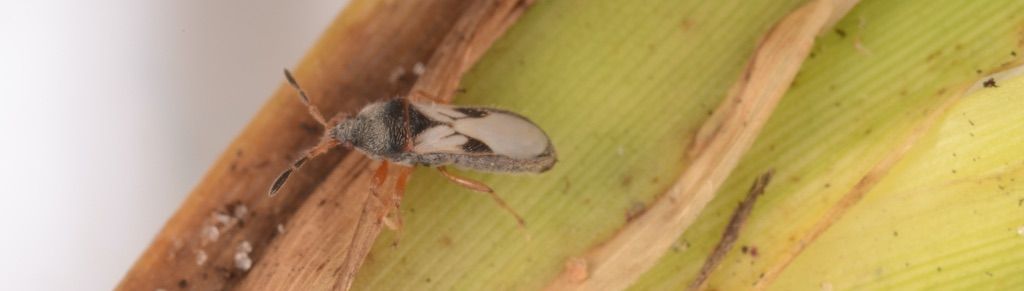
Southern Chinch Bug (Blissus insularis) Update in Florida
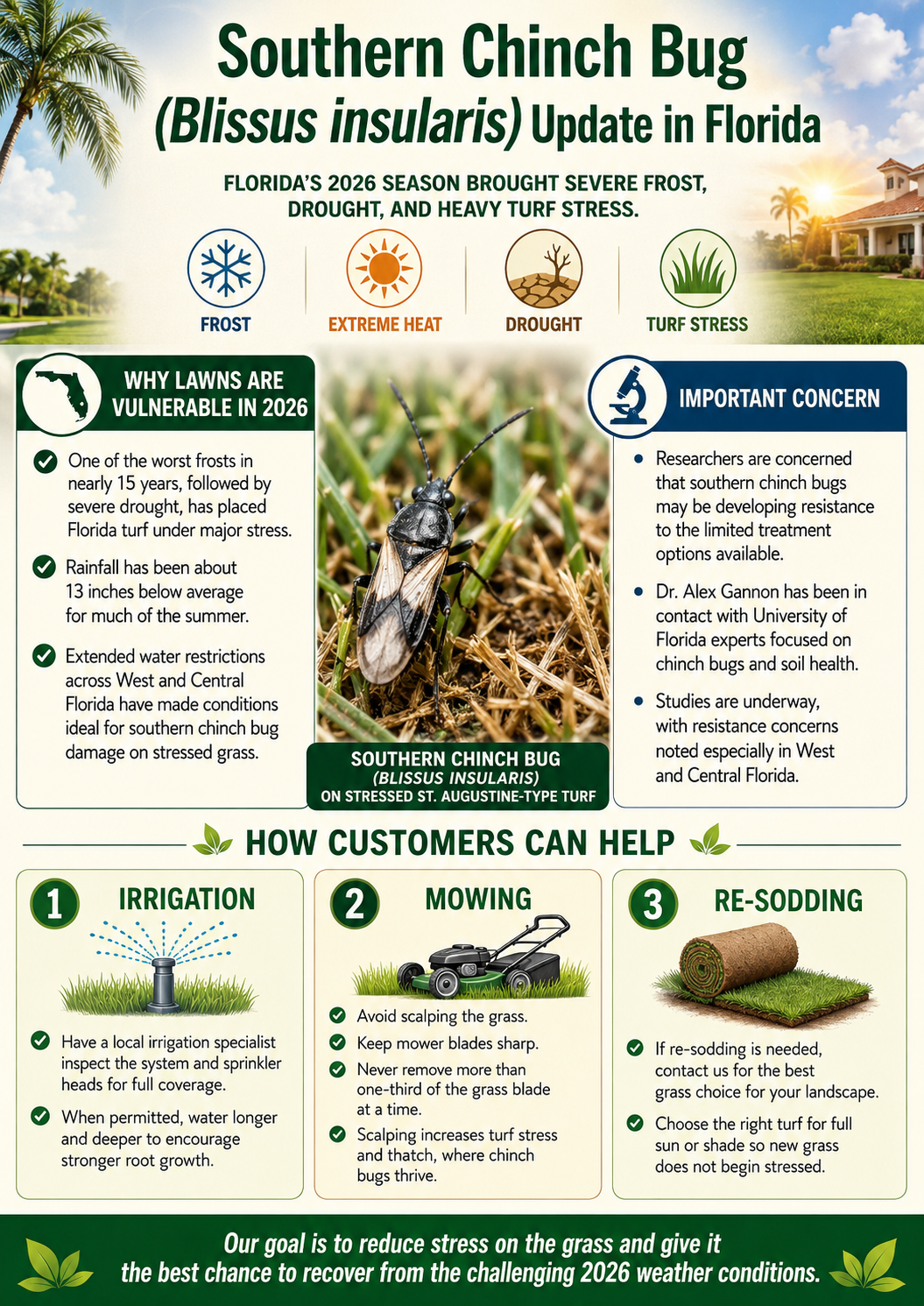
Florida’s 2026 season has been one for the books. From one of the worst frosts Florida has experienced in nearly 15 years to an extremely strong El Niño pattern that contributed to severe drought conditions throughout the state, our turfgrass has been under an enormous amount of stress.
For the majority of the summer, rainfall totals were approximately 13 inches below average, resulting in extended water restrictions throughout West and Central Florida. These conditions create an ideal environment for southern chinch bugs to feed on and damage already-stressed turfgrass.
With that being said, we need our customers’ help and understanding in protecting their lawns. Dr. Alex Gannon has been in contact with professors at the University of Florida who are focusing on chinch bugs and soil health. There is growing concern regarding chinch bug resistance to the limited number of chemicals currently available for treatment. Studies are underway, and resistance has already been observed in areas of Florida’s west coast and Central Florida.
Dr. Alex Gannon has outlined several steps customers can take to help reduce stress on their lawns and give the turf the best possible chance to recover and remain healthy:
1. Irrigation
Contact a local irrigation specialist to inspect your irrigation system and sprinkler heads. Make sure the system is operating properly and providing complete coverage throughout the lawn. When permitted under local watering restrictions, provide longer, deeper watering cycles. Deep watering encourages stronger root growth and helps the roots reach moisture deeper within the soil.
2. Mowing
Work with your landscaping company to avoid scalping the grass. Make sure mower blades are sharp, and avoid removing more than one-third of the grass blade at one time. Scalping places additional stress on the turf and can contribute to excessive thatch buildup, creating conditions where chinch bugs can thrive and reproduce.
3. Re-Sodding
If areas of your lawn need to be re-sodded, please contact us for recommendations on the best type of grass for your specific landscape.
It is important to select the appropriate turf variety based on factors such as full sun, partial shade, or heavy shade. Installing the wrong type of grass for the site can cause the new sod to become stressed from the beginning.
Our goal is to reduce as many stress factors as possible and give the turfgrass the best opportunity to remain healthy and recover from the challenging weather conditions we have experienced throughout 2026.
Share On: